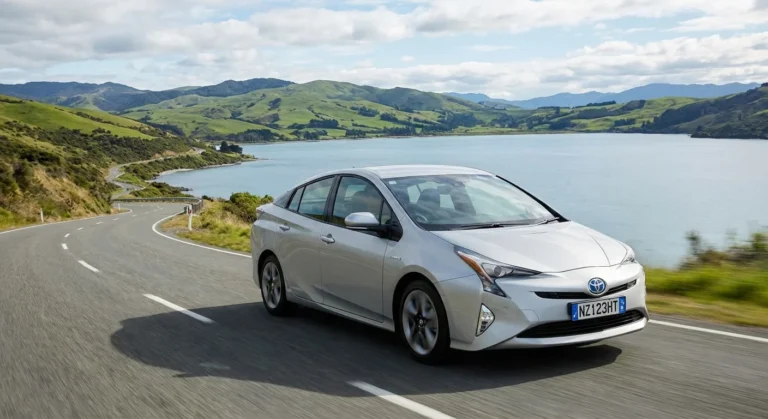
How to Drive a Hybrid Car | Practical Guide for NZ Drivers
6 min read
Learn how to drive a hybrid car efficiently in New Zealand. Tips on EV mode, regenerative braking, and…

Hamilton → Whakatane
191.31 km ~2.5 hrs ~$49 fuel (est.)
The scenic journey from Hamilton to Whakatane offers a delightful mix of picturesque landscapes and fascinating attractions. In just about 2 hours and 40 minutes, covering approximately 191.4 kilometers, this route includes notable milestones such as the drive from Hamilton to 167 Duncan Road, which is just 18 kilometers away and takes around 18 minutes. Along the way, there are opportunities to experience local gems like the Hobbiton™ Movie Set Tours and the Grey Roasting Co | The Tasting Room, both of which add charm to the trip.
Approx 17.6 km, taking 18 mins.
Approx 27.8 km, taking 18 mins.
Approx 12.5 km, taking 10 mins.
Approx 43.7 km, taking 34 mins.
Approx 13.2 km, taking 13 mins.
Approx 64.5 km, taking 53 mins.
Approx 12.0 km, taking 10 mins.
Updated: 2026-04-22 18:38
The scenic journey from Hamilton to Whakatane offers a delightful mix of picturesque landscapes and fascinating attractions. In just about 2 hours and 40 minutes, covering approximately 191.4 kilometers, this route includes notable milestones such as the drive from Hamilton to 167 Duncan Road, which is just 18 kilometers away and takes around 18 minutes. Along the way, there are opportunities to experience local gems like the Hobbiton™ Movie Set Tours and the Grey Roasting Co | The Tasting Room, both of which add charm to the trip.
As you continue, the next leg brings you from 167 Duncan Road to Karapiro, a distance of 28 kilometers in about 18 minutes. The charming town of Tīrau awaits just 13 kilometers later. Be sure to stop at TECT Park along the way before reaching Rotorua, which is about 44 kilometers further down the road. In Rotorua, visitors can explore the stunning Redwoods – Whakarewarewa Forest. Following the scenic drive to Okere Falls, Adventurers can wrap up their journey by visiting the Adrenalin Forest Bay of Plenty as you head toward Awakeri and finally arrival in Whakatāne.
Fuel costs play a significant role in planning your road trip. Keep in mind that refueling is generally cheaper in Auckland compared to other locations on the route by about 5%. Specific figures indicate that fuel in Rotorua is about 2% higher than some of the lower prices elsewhere on your journey. This fuel economy will ensure that your experience remains enjoyable as you traverse these beautiful landscapes.
| Vehicle Type | Litres Required | Cost |
|---|---|---|
| Economic hybrid | 7.7 L | ~$18 |
| Cheap car | 15.3 L | ~$36 |
| Van | 19.1 L | ~$46 |
| Ute | 23.0 L | ~$55 |

This journey not only highlights the beauty of New Zealand’s landscape but also showcases the abundant attractions available along the way. Make sure to enjoy each stop, embrace the local culture, and relish the drive.
Fuel prices in New Zealand can fluctuate significantly between regions. As of today, the most competitive price we've tracked is $3.17/L at Auckland CBD. We generally find that filling up in larger hubs like Hamilton before heading into more rural stretches can save you a decent amount on your total trip cost.
While the direct driving time is approximately ~3 hrs, we always recommend allowing an extra 30 to 45 minutes. New Zealand roads can be winding, and you may encounter slow-moving vehicles or roadworks. It's much better to arrive relaxed at Whakatane than to rush through the beautiful scenery.
The trip covers about 191 km. The route primarily follows State Highway 1, which is a well-maintained stretch of road. You can expect a mix of open highway and some more technical, winding sections as you get closer to Whakatane, so keep an eye on your speed and enjoy the views.
Depending on the exact path you take, you might encounter tolls (such as the Northern Gateway, Tauranga Eastern Link, or Takitimu Drive). These are clearly signposted. Most rental cars have their plates automatically read; just ensure you check your rental agreement regarding how these tolls are processed to avoid admin fees.
Based on the current average price of $3.17/L, a standard economy rental car will likely use about $49 worth of fuel for this journey. If you're driving a larger SUV or van, we suggest adding about 20-30% to that estimate to be safe.
Absolutely! Passing through Front Paddock is a great opportunity to take a break. There are several local cafes and public rest areas where you can grab a flat white and stretch your legs. Breaking up the drive every 90 minutes is the best way to stay alert on New Zealand roads.
Yes, the infrastructure for electric vehicles is quite good here. You'll find rapid DC chargers in both Hamilton and Whakatane, as well as at least one charging station in Front Paddock. We recommend using the 'PlugShare' app to check real-time availability before you depart.
To have the smoothest run, we suggest avoiding the weekday morning rush (7:00 AM – 9:00 AM) and the afternoon peak (4:00 PM – 6:00 PM) specifically around Hamilton. Leaving mid-morning or early afternoon usually results in a much more peaceful drive with fewer delays.
Main centres like Hamilton have several 24-hour options. Once you are on the open road toward Whakatane, many stations switch to 'unattended' mode, meaning you can still get fuel using a credit or debit card with a PIN at the pump terminal.
Most of this route stays at lower altitudes, so snow is very rare. However, during winter months (June–August), black ice can occasionally form in shaded areas around mountain passes in the early morning. If you're driving in winter, just take it easy until the sun is fully up.
If you're travelling with a furry friend, TECT Park in Grey Roasting Co | The Tasting Room is a fantastic spot. It has plenty of space for dogs to run. Just remember to keep them on a lead in any national park areas or near farmland where livestock might be present.
Keep your camera ready as you pass through Whakatane. There are several safe 'lookout' pull-over bays where you can get a great shot of the rolling hills and scenic countryside. It's one of the most iconic views on the drive to Whakatane.
Yes, the road is fully sealed (bitumen) all the way from Hamilton to Whakatane. Whether you've hired a small compact car, a hybrid like our Nissan Notes, or a larger family SUV, you'll find the road conditions perfectly suitable.
For more than just a quick snack, Grey Roasting Co | The Tasting Room has the best selection of local pubs and restaurants. It's roughly halfway, making it the perfect spot for a lunch break before finishing the second half of your trip to Whakatane.
You'll have a strong signal through most of the trip, especially near towns. However, New Zealand's terrain means there are occasional 'dead zones' in deep valleys or remote stretches. We recommend downloading your offline maps before you leave Hamilton just in case.
New Zealand is great for this! Most small towns have very clean public facilities. The ones in Grey Roasting Co | The Tasting Room (usually near the local library or i-SITE) are particularly well-maintained and easy to access from the main road.
Safety is a priority on our roads. There are often fixed speed cameras near Grey Roasting Co | The Tasting Room, and mobile police units are common on the open road. Always stick to the 100km/h limit (or lower as signposted) to ensure a safe trip and avoid fines.
Our live data shows that Hamilton is currently cheaper than Whakatane. If your tank is less than half full, we'd recommend topping up at Auckland CBD now to take advantage of the better rate before you hit the more expensive regions.
Yes, this route is designed with safety in mind. There are dedicated passing lanes every few kilometres. If you find a queue of cars behind you, please use the 'slow vehicle bays' to let others pass safely—it makes the drive better for everyone!
The most common thing to watch for is wandering livestock or birds like Pukekos near the roadside in rural Whakatane. Also, keep an eye on the weather; heavy rain can cause localized surface flooding on some of the lower-lying sections of the road.